What exactly is thermal clothing?
Thermal clothing is worn directly against the skin. It retains body heat and wicks away moisture. Examples include long-sleeved thermal tops, thermal trousers, thermal socks and thin undergloves. Outdoor sports enthusiasts call this the base layer: the first layer of your clothing.
A good thermal layer does two things at once:
- Insulation: There are countless tiny air bubbles trapped between the fibres. Trapped air is a poor conductor of heat, which means your body heat is less likely to escape.
- Draining moisture: Sweat evaporates from the skin. Wet fabric against your skin wicks away heat much more quickly than dry fabric. That is why you feel the cold so quickly when you stand still after working up a sweat.
Thermal clothing therefore always fits snugly against the body. A loose-fitting shirt allows air to circulate and loses much of its effectiveness.
The models side by side
All come with a 2-year warranty and free delivery in the Netherlands, Belgium and Germany.
| Model | Type | Heat | Battery | Price |
|---|---|---|---|---|
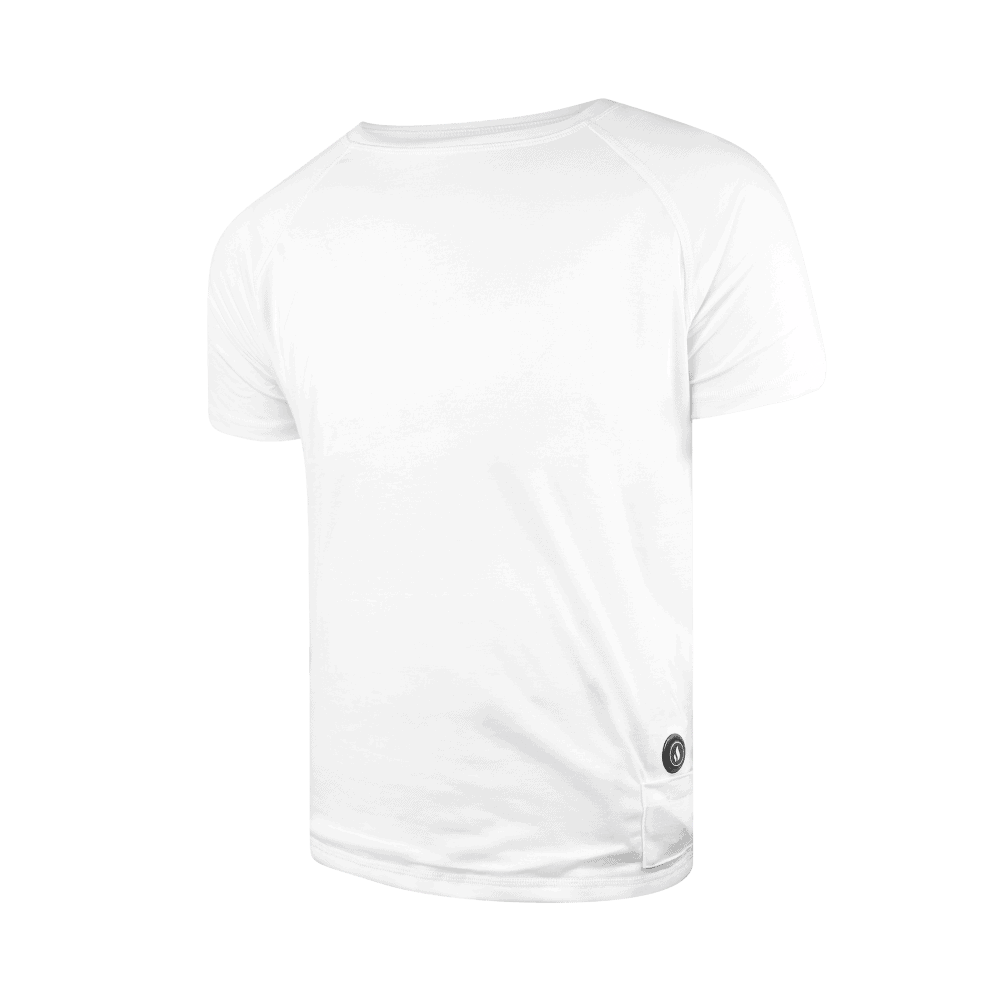 T-UnderHeat | Under a T-shirt | 6 hours | 2,500 mAh | €119,95 |
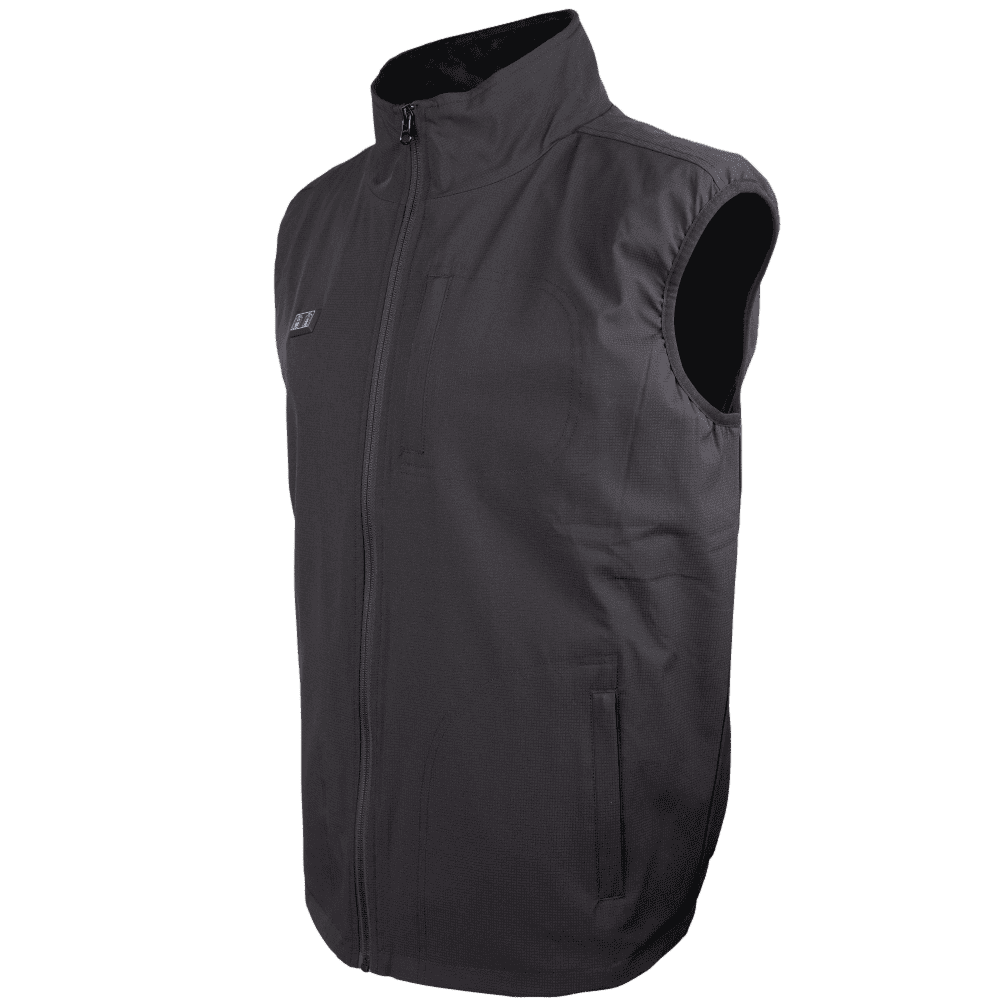 BodyActive 12V | Lightweight body warmer | 9 hours | 5,000 mAh | €149,95 |
 HeatFlow Slim | Cardigan | 11 o’clock | 10,000 mAh | €159,95 |
Why do you feel cold, even when wearing thermal clothing?
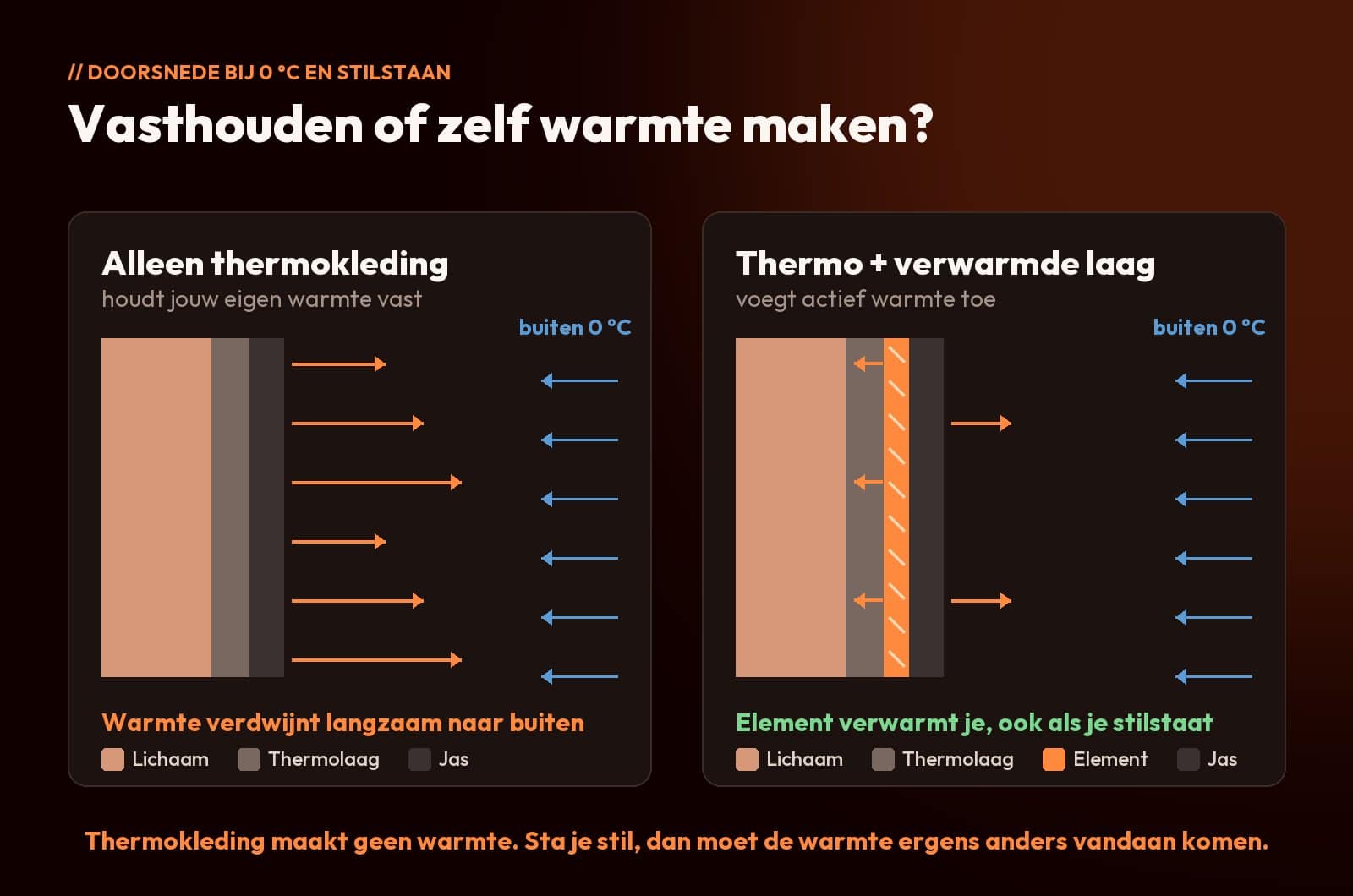
Your body loses heat through contact with cold surfaces, through air and wind flowing past it, through radiation and through the evaporation of moisture. Thermal clothing slows down this heat loss. But you decide for yourself how much heat there is to retain: by moving.
As long as you’re active, your muscles produce plenty of heat and thermal clothing works a treat. If you’re standing still or sitting down, that heat production drops sharply. Your body then prioritises protecting your torso and organs, constricting the blood vessels leading to your hands and feet. As a result, your fingers and toes are the first to get cold.
That’s where thermal clothing stops being helpful: an extra layer can’t retain heat that isn’t there. Is your torso staying warm, but your hands and feet aren’t? Then read our article on cold hands and feet.
Thermal clothing or heated clothing: the difference
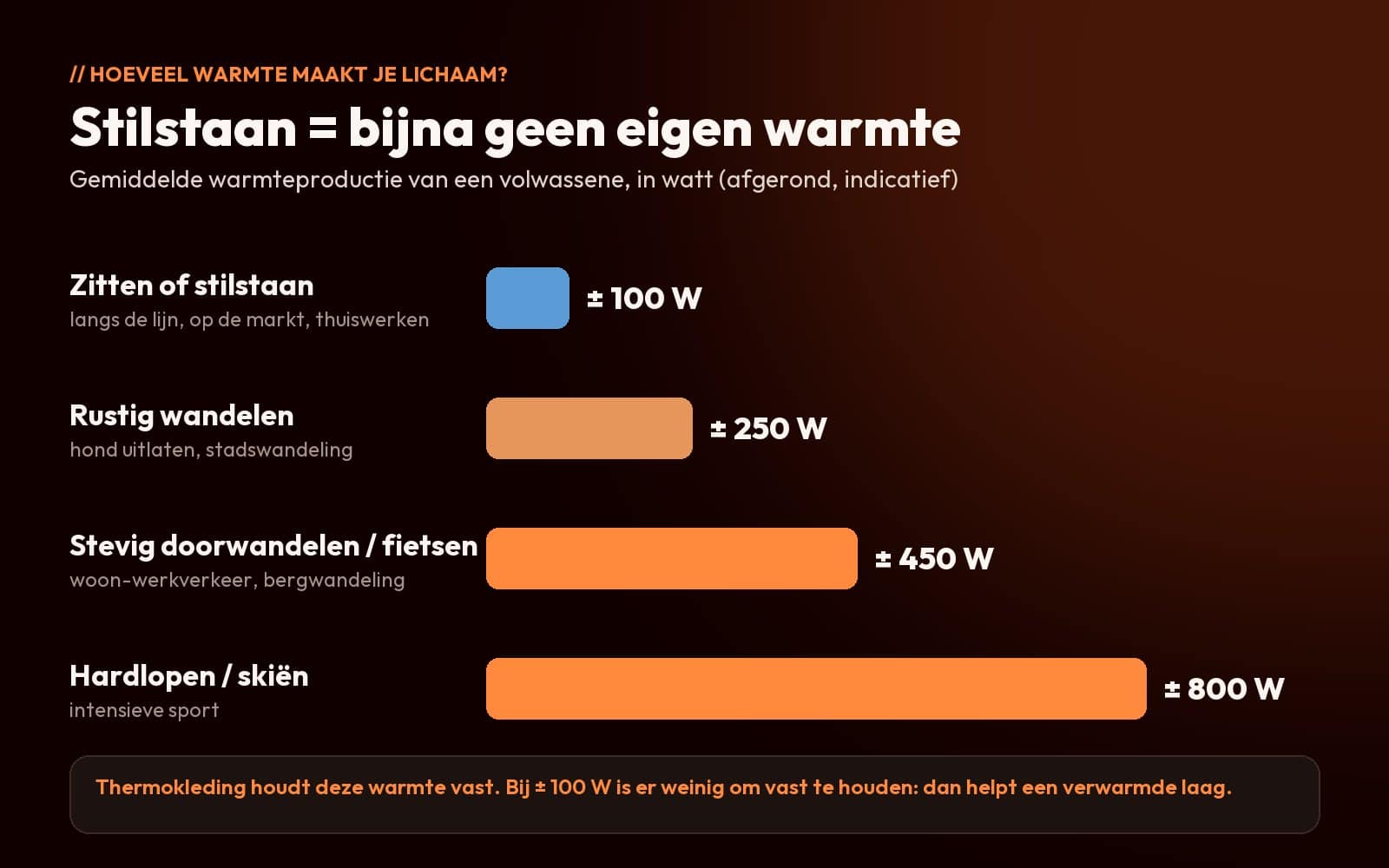
Thermal clothing retains the heat your body generates. Heated clothing provides additional warmth via built-in heating elements and a battery.
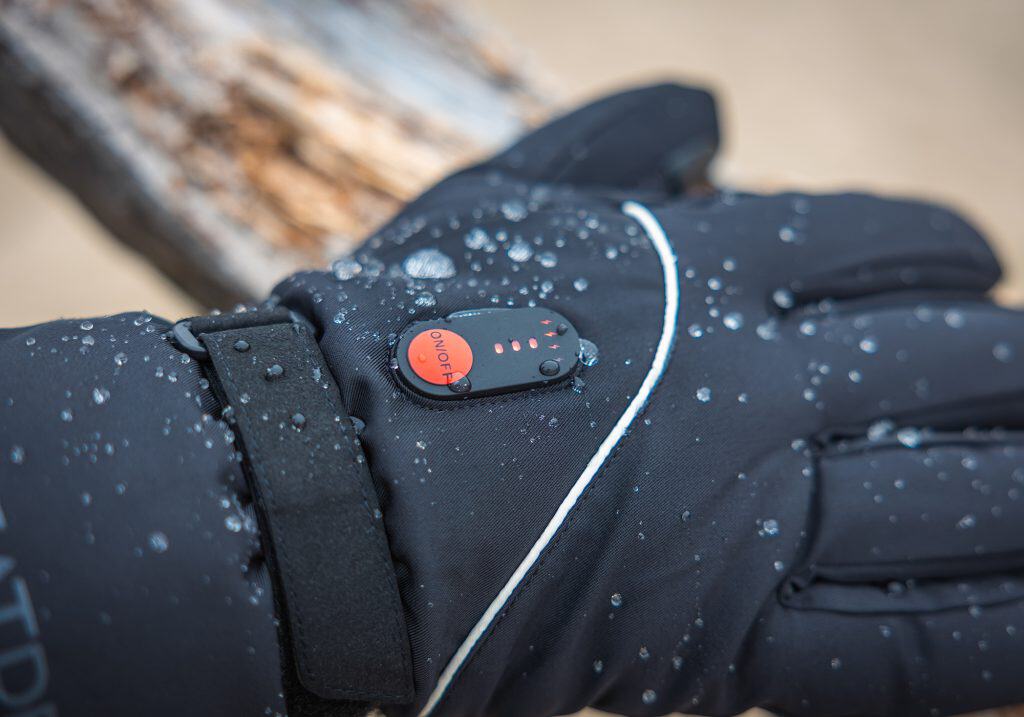
Heated clothing features thin, flexible carbon-fibre heating elements in the areas that cool down quickly: the back, chest, lower back, the backs of the hands, fingertips and toes. You can select the heat setting using a button or an app. With HEATDRY, the highest settings on most garments reach up to 65 °C at the heating element. You can read exactly how it works in How it works in 6 steps.
| Thermal clothing | Heated clothing | |
|---|---|---|
| How it works | Insulates and wicks away moisture | Insulates and actively generates heat |
| When stationary | Cools down slowly | Stays warm |
| During vigorous exercise | Ideal | Off or on the lowest setting |
| Hands and feet | Limited | Yes, with heated gloves and socks |
| Adjustable | Only with extra layers | Yes, usually 3 settings |
| Service life | Unlimited | Approx. 7 to 12 hours per load |
| Approximate price | Approx. €15 to €120 | At HEATDRY from around €115 |
So it’s not a case of one or the other. The warmest solution is almost always a combination: a good thermal layer against the skin and heating in the areas where you cool down first.
Which fabric is the warmest? Merino wool, synthetic or cotton?
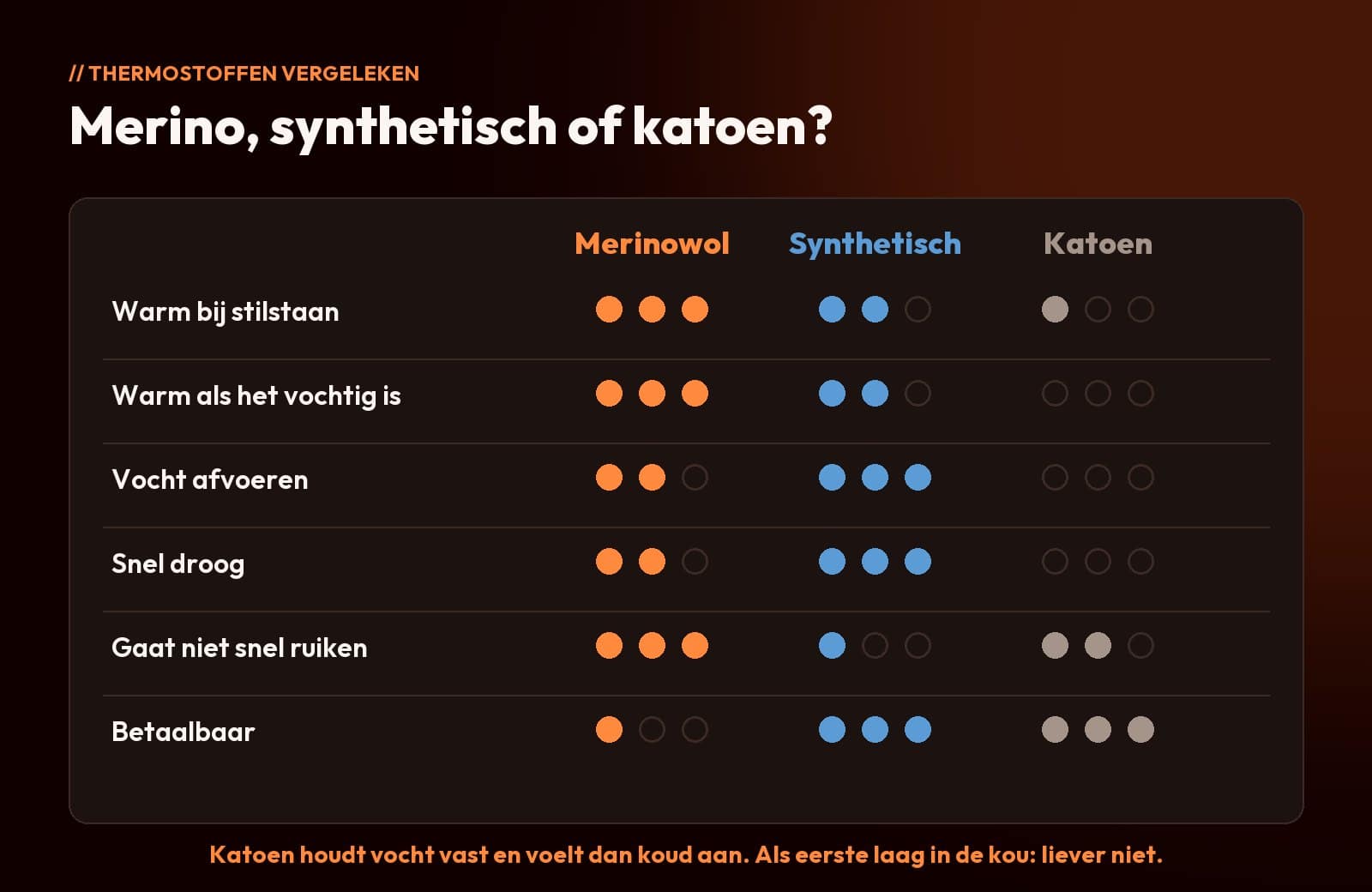
Merino wool thermal clothing
Merino wool thermal clothing Many people consider it to be the best thermal clothing. The fibres are so fine that they don’t itch, and the crimped structure traps a lot of air. Merino also absorbs a considerable amount of moisture before it feels wet, and remains relatively warm even when damp. It is also less likely to develop an odour. The downsides: it’s more expensive, and merino is more delicate when washed.
Synthetic thermal clothing
Polyester and polypropylene wick away moisture very quickly and dry fast. This makes them ideal for high-intensity sports such as running, cycling and football. Synthetic fabrics are cheaper and more durable, but they tend to develop odours more quickly and provide less insulation when you’re stationary.
Cotton: best avoided
Cotton feels soft, but it traps sweat. This leaves you with a cold, wet layer against your skin. We do not recommend cotton as a base layer for outdoor work, winter sports or walking.
What makes good thermal clothing? Here’s what to look out for
- Fit: Fitted, but not too tight. If it’s too tight, it restricts blood flow.
- Fabric weight: For merino, around 150 to 200 g/m² for sports and mid-season wear, and 250 g/m² or more for really cold weather. Heavy woollen thermal clothing 400 g/m² is often used for outdoor work.
- Flat seams: They don’t chafe under a rucksack or work clothes.
- Length: A shirt that falls well below your lower back keeps your kidneys warm, even when you bend over.
- Combination: Does the layer fit well under your coat, workwear or heated clothing?
The layering system: combining thermal clothing and heated clothing
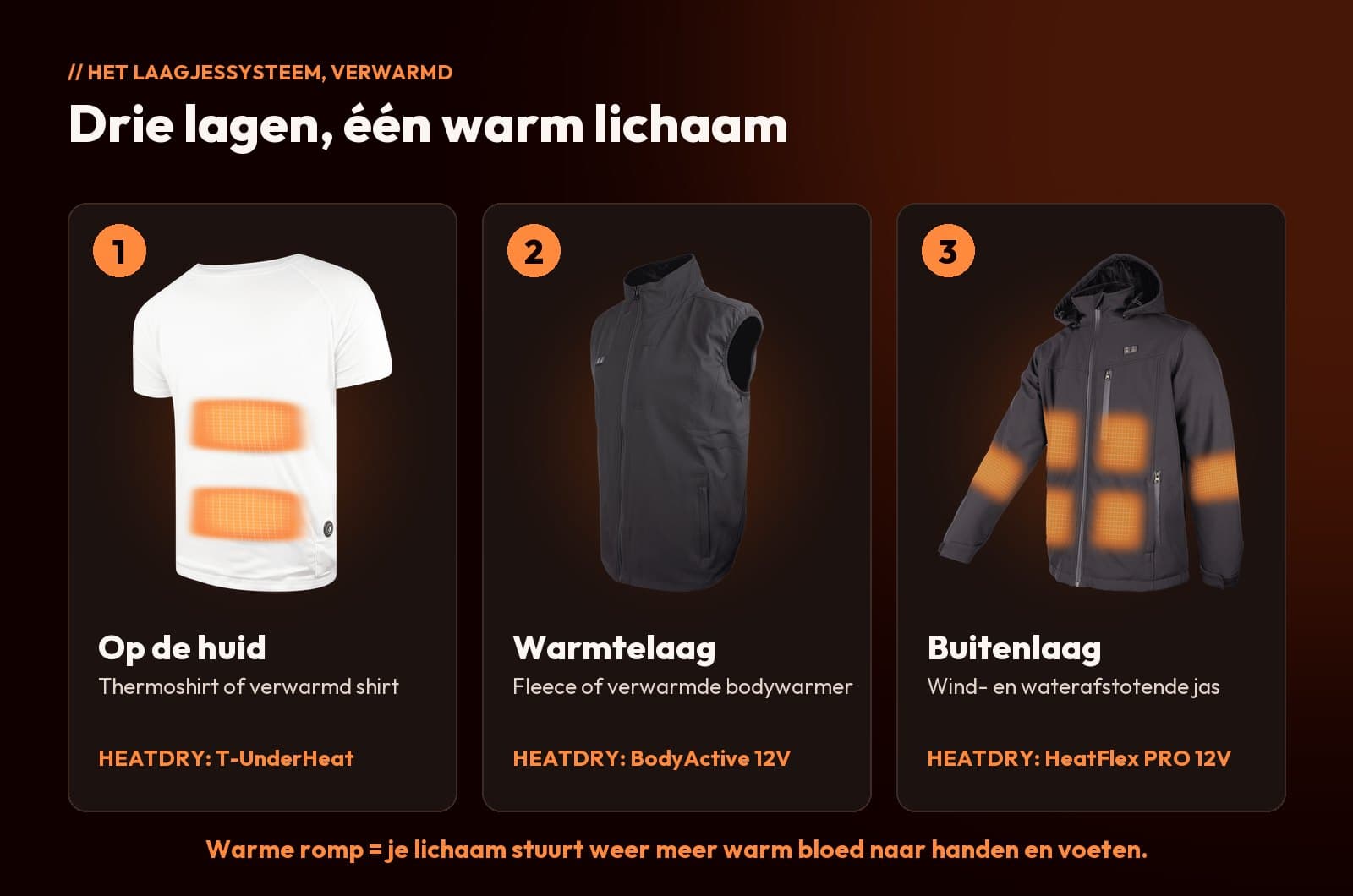
Outdoor professionals dress using a layering system. A heated layer makes this system even more effective:
- On the skin: a thin thermal layer made of merino or synthetic fabric, which keeps you dry. If you want the warmth directly against your skin, choose a heated undershirt.
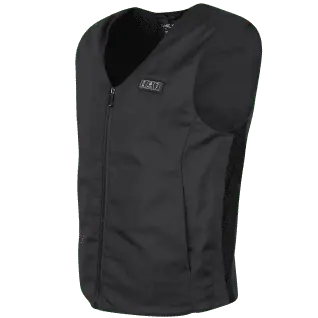
- Heat layer: a fleece, or a heated bodywarmer or heated waistcoat. A warm torso means that your body sends more warm blood to your hands and feet again.
- Outer layer: a wind- and water-repellent jacket. Or you could combine layers two and three into one heated softshell jacket.
How it works in practice
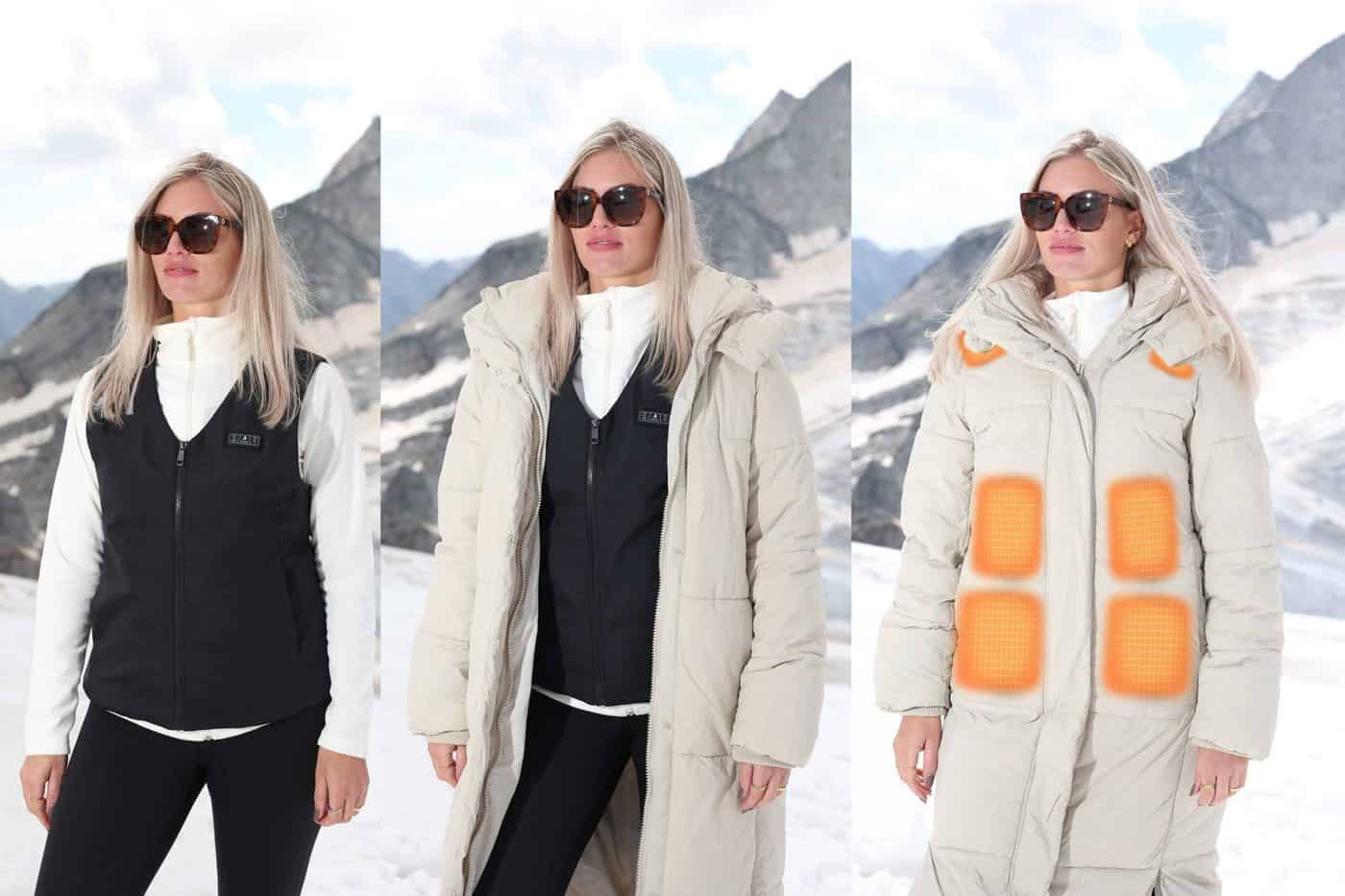
You wear a thin, heated waistcoat under your own winter coat. Nobody can see it, but the heating zones on your back and chest keep your core warm. This means your body doesn’t have to restrict blood flow to your hands and feet as much.
Tip: Wear a [item] under heated clothing thin thermal layer. A thick insulating layer between the heating element and your skin traps some of the heat.
The same principle applies to your hands and feet. Heated socks and heated gloves deliver heat precisely to the areas where your body cuts back first.
Heated thermal layers
Heated thermal clothing: the best of both worlds
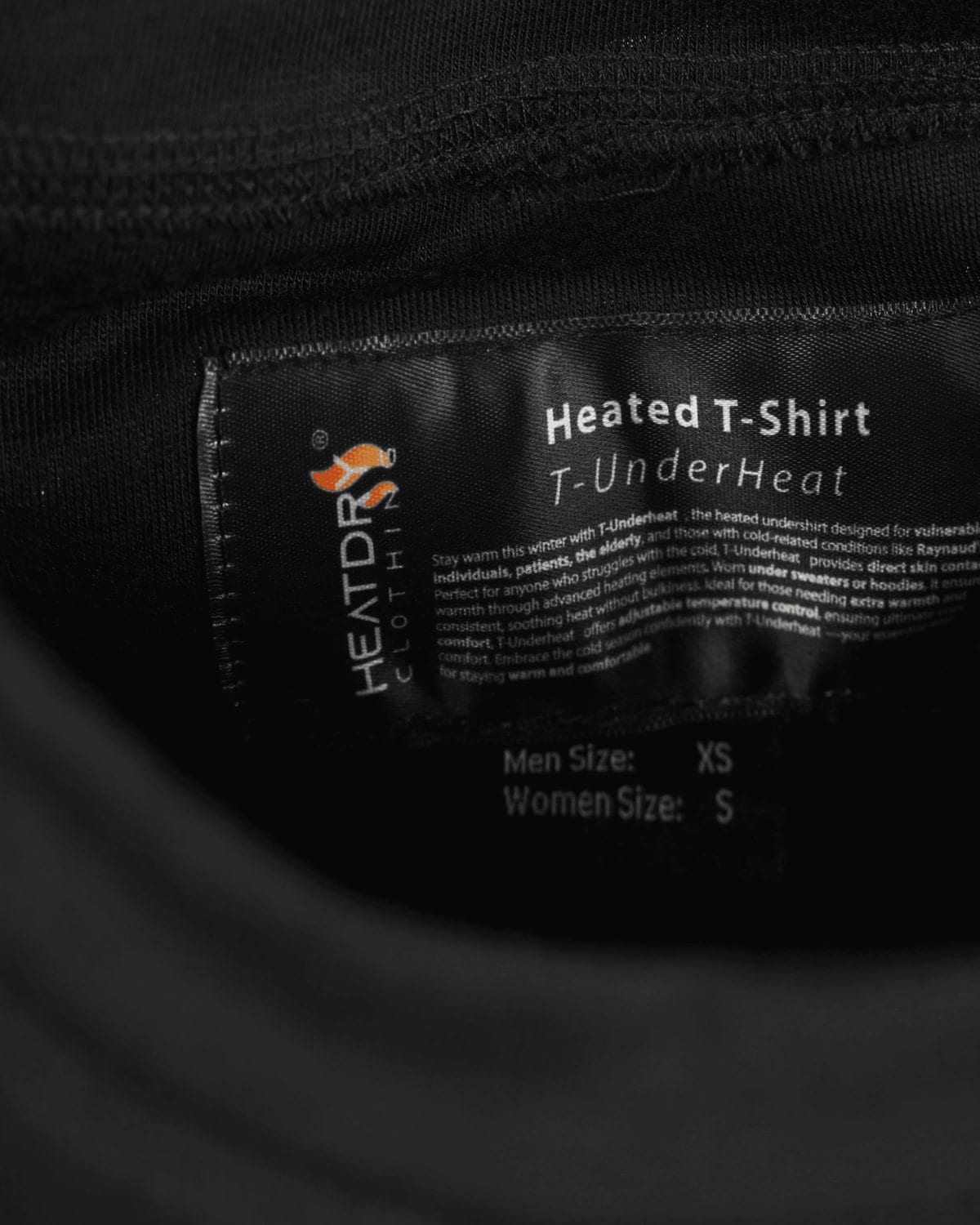
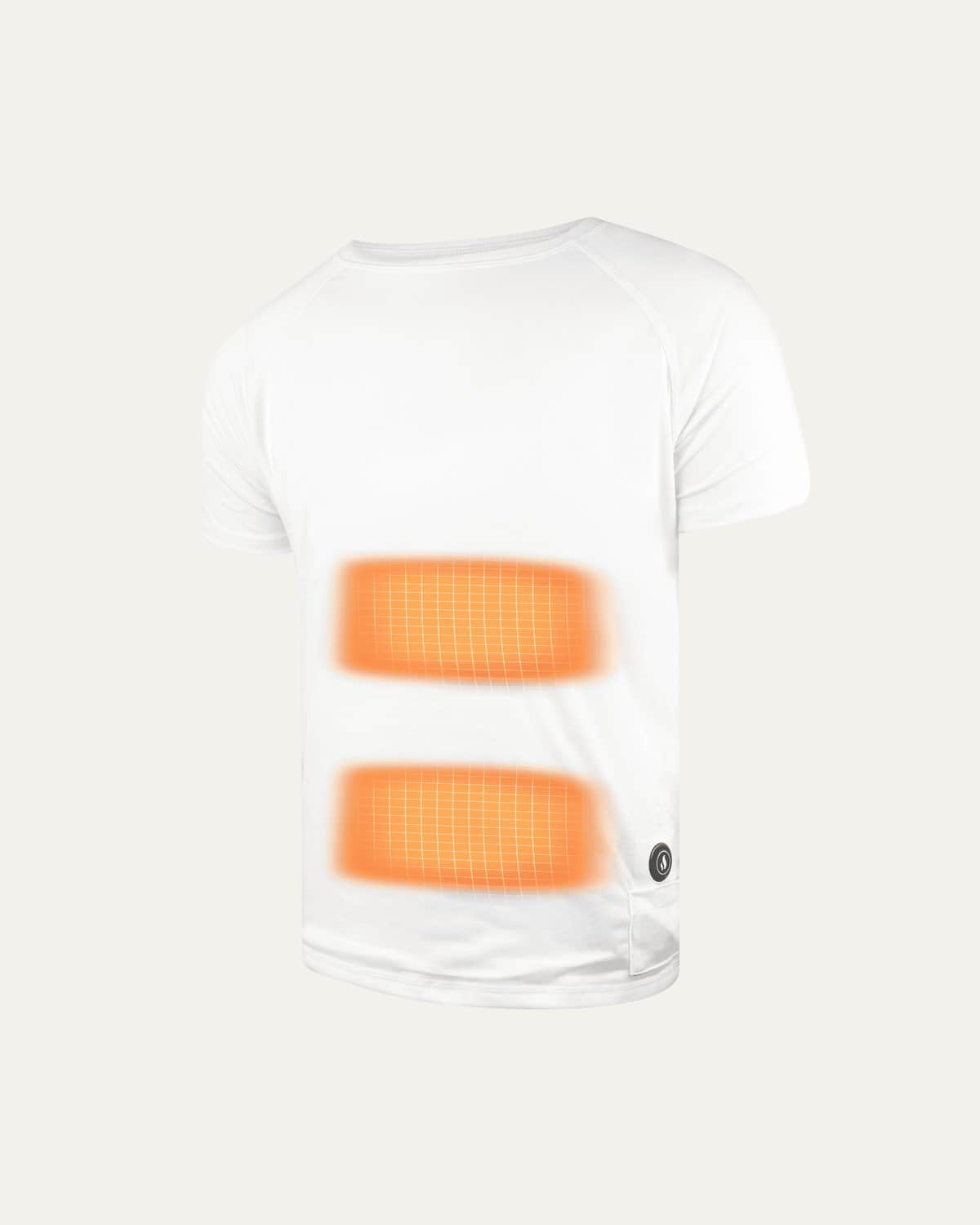
The heated undershirt T-UnderHeat is thermal clothing with its own heat source. It is thin and close-fitting, just like a standard thermal top, with heating zones on the chest and back and three heat settings up to 65 °C. You can wear it discreetly under your work clothes, jumper or shirt.
Heated thermal clothing is particularly useful for:
- people who stand or sit still for long periods in the cold, such as market traders, drivers, security guards and spectators;
- outdoor workers who alternate between physical exertion and waiting;
- people who feel the cold easily due to their age, poor circulation or Raynaud.
Thermal clothing for men and women
Men’s thermal clothing
On average, men have more muscle mass and therefore generate slightly more heat at rest. For men's thermal clothing Many people opt for a light layer when active and a heavier one when stationary. Pay attention to the length of the body and sleeves, especially if you do a lot of bending or lifting.
Women’s thermal clothing
On average, women are more likely to have cold hands and feet, partly due to hormones and lower muscle mass. At thermal clothing for women It is therefore worth ensuring that, as well as a good thermal layer, you also keep your hands and feet warm. Women’s styles often have a fitted cut, so that no pockets of cold air form.
Thermal clothing for different situations
Skiing and winter sports
On the slopes, opt for a medium-weight merino or merino-blend top, with a fleece and a ski jacket over the top. You’ll cool down quickly on the lift, whilst waiting for your ski lesson or on the terrace. What’s more, ski boots can be tight on your feet. That’s where heated ski socks and heated ski gloves.
Football and other sports
Anyone looking for thermal clothing for football usually thinks of the players. They wear a synthetic thermal top and tight-fitting thermal trousers under their kit. For parents, coaches and spectators on the sidelines, it’s a different story: you hardly move at all. A heated body warmer under your coat makes all the difference.
Running and cycling
When running, choose a lightweight synthetic or merino blend top. When cycling, you’ve got the wind to contend with as well, and your hands take the brunt of it. Read more about heated gloves for cycling.
Motorbikes and scooters
Due to the wind chill, a temperature around freezing on a motorbike can quickly feel like a severe frost. A thermal layer under your riding gear is essential; for your hands, choose heated motorbike gloves.
Work
Whether you’re on a building site, working in logistics or in a cold store, choose sturdy, washable synthetic or blended thermal clothing. For those moments when you’re standing still, there’s heated workwear.
Thermal clothing for children
Children lose heat more quickly than adults because their skin surface area is large in relation to their body size. Good thermal clothing for children, made from merino wool or a soft synthetic fabric, is therefore a sensible choice for winter sports or school trips. Choose a size that fits snugly. For young children, standard thermal clothing is the sensible choice, as they cannot always tell you when something is getting too warm.
Washing and caring for thermal clothing
- Was merino wool at 30 °C on a woollens or delicates cycle, using woollens detergent. Do not use fabric softener: it coats the fibres and reduces moisture wicking.
- Synthetic thermal clothing can usually be washed at 30 to 40 °C, even without fabric softener.
- Leave the clothes to dry flat or on a clothes horse; do not dry them on the radiator or in the tumble dryer.
- You should only wash heated clothing after you have disconnected the battery. It is best to use a laundry bag. All the steps are set out in our washing instructions.
Buying thermal clothing: what’s right for you?
| Your situation | Our advice |
|---|---|
| You exercise a lot and for long periods (running, skiing) | Good thermal clothing is all you need. Perhaps some heated gloves for the lift or during a break. |
| You alternate between being active and resting (walking, working outdoors, cycling) | A thermal layer plus a heated body warmer or heated gloves. |
| You stand or sit still for long periods (as a spectator, at a market, whilst working from home) | A thermal layer plus a heated undershirt or waistcoat, and heated socks. |
| Your hands and feet are always cold | Heated gloves and socks. Read more about poor blood circulation. |
| You ride a motorbike or a scooter | Thermal layer plus heated motorbike gloves and a heated waistcoat under your suit. |
Warm hands and feet, time and time again
- Real customers, real situations
- 14-day cooling-off period if you’re not satisfied
- 2-year warranty on your heated clothing
Daily outdoor work much finer
“I often work outdoors and wear them almost every day. They warm up quickly and stay nice and even. Even in freezing weather, I can just carry on without having to keep stopping to warm my hands up.”
Along the football pitch finally no cold
“I often stand on the sidelines at my children’s matches. Whereas I used to stand there shivering, I can now watch the game in a relaxed manner – even two matches in a row. It feels like a luxury just to have warm hands, whilst everyone around me is complaining, hehe.”
Along for the ride every day
“I cycle to the office for 30 minutes and use them every day. They do exactly what I expected: warm hands :). No faff – just charge them in the evening and they’re ready the next morning.’
Daily outdoor work much finer
I often work outside and wear them almost every day. The heat comes on quickly and stays nice and even. Even in freezing weather, I can continue working without having to go somewhere to warm my hands each time.
Along the football pitch finally no cold
I often stand by my children's pitch. Where before I was shivering, now I can watch relaxed, even two games in a row. It feels luxurious to just have warm hands, while everyone around me is complaining hihi.
Along for the ride every day
I cycle 30 minutes to the office and use them every day. They do exactly what I expected them to do: warm hands :). No hassle, just charge them in the evening and they are ready the next morning.
Which heated layer is right for you?
Decide where you’ll mainly be wearing it. We’ll recommend the best style straight away.

Thin and close-fitting like a thermal top, with insulation on the chest and back.
View T-UnderHeat · €119.95Frequently asked questions about thermal clothing
What is the best thermal clothing?
That depends on what you’re doing. For low-intensity activities and use over several days, merino wool is the warmest and most comfortable option. For intensive exercise, synthetic thermal clothing is better, as it dries more quickly. If you’re standing still for a long time, no thermal layer on its own will keep you completely warm. A heated layer is the best addition in that case.
Is merino wool warmer than synthetic thermal clothing?
When you’re stationary or doing light exercise, this is usually the case. Merino wool insulates well and stays relatively warm even when damp. During strenuous exercise, synthetic fabrics wick away sweat more quickly, meaning you cool down less afterwards.
Should thermal clothing be tight-fitting?
It should fit snugly, but not be too tight. If it’s too loose, air will circulate. If it’s too tight, it will restrict your blood flow.
Can you wear thermal underwear under heated clothing?
Yes, that’s actually recommended. Choose a thin thermal layer so that the heat from the heating elements can reach your skin properly.
What is heated thermal clothing?
Thermal clothing with built-in heating elements and a battery, such as the T-UnderHeat heated undershirt. It fits just as snugly as a normal thermal shirt, but generates its own heat.
How do you wash your thermal clothing?
Wash merino at 30 °C on the wool cycle, without fabric softener, and leave it to dry flat or on a drying rack. Always wash heated clothing with the battery removed.
How long do heated clothes stay warm?
With HEATDRY, this takes approximately 7 to 12 hours per load, depending on the product and the setting. On the highest setting, the burning time is shorter.
Is thermal clothing suitable for children?
Yes, especially for children, as they cool down more quickly than adults. Choose a soft, well-fitting fabric without any itchy seams.
More information by topic?
🔥 Heated gloves
🧦Heated socks
❄️Problemen cold hands/feet
🩺Medical conditions & heat
+ 2 more− less
⚡ Features & USPs
🔥 Heated clothing
Ready for some warmth?
Order before 12:00 and it will be dispatched today. 14-day cooling-off period and a 2-year guarantee.